May 2024

MAY 2024 performances of works by Aleksandra Vrebalov and other events

05/09 – Novi Sad, Serbia, Birthday Pieces for the Golden Jubilee of the Academy of Arts in Novi Sad, curated by Aleksandra Vrebalov, Svilara, 19h.  World premieres of works by 15 composers who have studied or taught at the Academy over the past 50 years. Program: Dimitrije Beljanski, Stanislava Gajić, Ivana Govorčin, Slobodanka Bobana Dabović Djurić, Miloš Zatkalik, Vera Zloković, Ana Kazimić, Zoran Komadina, Stevan Kovacs Tickmayer, Kristina Kovač, Milan Mihajlović, Mihajlo Racpeti, Nemanja Sovtić, Aleksandra Stepanović, Baškim A. Šehu. 

05/09 Toronto, Canada, ilektrikés rímes, Kronos Quartet

05/11 Novi Sad, Serbia, SOUND VISIONS: Composition students of Aleksandra Vrebalov at the Academy of Arts in Novi Sad present their works in collaboration with students from the Department of Audio-Visual Media in the class of prof. Siniša Bokan. Students and professors of the Academy of Arts in Novi Sad will participate. Svilara, 20h. Program: Beljanski, Mastikosa, Mrdakovic, Pićuric.

05/12  Atelje 212 Belgrade, MAMA, directed by N. Bradic, sound by A. Vrebalov

05/14  Hamburg, Germany, GOLD CAME FROM SPACE, Kronos Quartet

05/15 Vienna, Austria, GOLD CAME FROM SPACE, Kronos Quartet

05/17  St. Louis, Missouri, MY DESERT, MY ROSE, Arianna String Quartet

05/17  Zürich, Switzerland, GOLD CAME FROM SPACE, Kronos Quartet

05/18  Perlez, Serbia, THE SEA RANCH SONGS, Zrenjaninski kamerni orkestar, Mikica Jevtic, cond.

05/20  Novi Sad, Serbia, A WORKER BEE – HARMONY AND GEOMETRY: Composition students of Aleksandra Vrebalov at the Academy of Arts present their collaborative sound installation with students of the Department of Visual Arts in the class of Bosiljka Zirojević in partnership with Matica srpska, Akademija umetnosti, Fondacija Laza Kostic. Hol Matice srpske, 20h. Program: Beljanski, Mrdakovic.

05/21  Hanover, Germany, GOLD CAME FROM SPACE, Kronos Quartet

05/22  Belgrade, Serbia, ALL VREBALOV PROGRAM: DANUBE ETUDE, THE TIGRIS VERSES and SIMIĆ SONGS at Guarnerius; performed by Drasko Adzic, voice, Djordje Nesic, Branko Dzinovic, Aleksandar Latkovic, Boban Stosic, Vladimir Jovanovic, and Nada Kolundzija. 

05/24  Amsterdam, The Netherlands, A THOUSAND THOUGHTS, Kronos Quartet and Sam Green

ANTENNAE

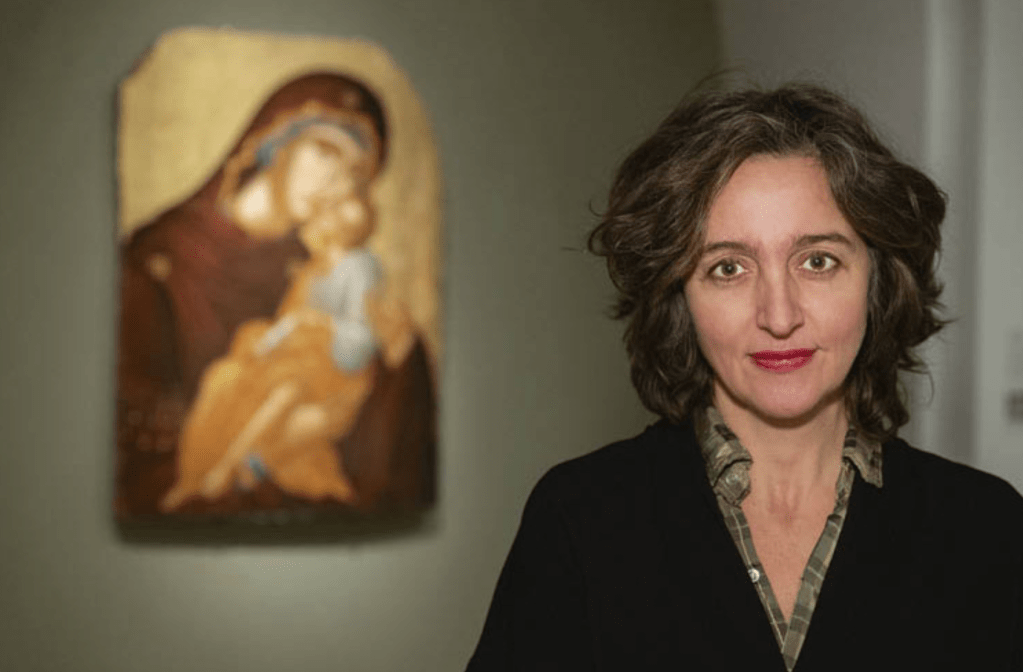
 Antennae was inspired by the icon of the Virgin of Tenderness (Virgin Eleousa), which dates from the period of late Byzantium (1425-1450) and is in the Byzantine collection of the Cleveland Museum of Arts (USA).

The world premiere of Antennae by Aleksandra Vrebalov is the third in a series of compositions commissioned by the museum in partnership with the Cleveland Foundation. This evening-long sound experience features Cappella Romana, 25 local singers, four trumpets, a string quartet, two organs from the museum’s collection, and percussion, with visitors dispersed throughout the galleries. Due to the specific architecture of the museum, the sound will travel and mix, reflecting and resonating.

It’s a composer’s dream to create a work with no limits on instrumentation, duration, or subject matter. For my Creative Fusion residency, the only requirement was that my work be inspired by the museum’s collection. I felt like I was given permission to dive into a gigantic treasure chest and search for the sound of the most beautiful objects of imagination and intellect across humanity’s history.

Upon my first visit to the museum in October 2018, I endeavored to understand how time and energy flow throughout the campus. I admired the architecture as much as the artifacts. The vastness of the Ames Family Atrium supported clarity and bold thoughts. Airy and bright, it felt like a place of decompression after the denser energy of the galleries. I imagined the museum like a walk-through music box, resonating in a way not heard before: with sounds played simultaneously through galleries and building up over time. Each person’s level of participation and choices of direction and speed in moving through the space would determine their unique perspective and listening experience.

In the arched, intimately lit Byzantine gallery I felt an immediate connection: there she was, the Virgin Eleousa—the golden hue, the iconography of an embrace with cheeks touching. It was familiar and reminded me of home. I grew up in Serbia (then Yugoslavia) during the socialist regime. Institutionalized religion was not part of my generation’s upbringing, but almost every home had an ikona. In the culture rooted in Eastern Orthodoxy that flourished during the Byzantine era, icons were not seen as objects. They were portals, powerful facilitators of miracles and healing. I wondered, standing in front of the Virgin of Tenderness, how many objects in the museum have had the same dormant power revealed to insiders, while the rest of us walked by, merely appreciating their material attributes and their historical and aesthetic value.

The aural counterpart of an icon is a chant; these two millennia-old forms are, within Byzantine tradition, considered portals to another realm. Chants are not songs but rather sound codes transmitted by choros, a choir consisting of everyone present, musician or not. In fact, in 2019 UNESCO announced the inclusion of Byzantine chant on the list of Intangible Cultural Heritage of Humanity.

My connection to Byzantine chant is also personal, through a small monastery in northern Serbia. Its two dozen monks begin their day with a 4:00 a.m. service, make candles and jar honey, cook meatless meals, and keep the ancient musical tradition of Byzantine chanting through their services and choir practice. Over the years I have had the privilege of attending liturgies followed by simple meals in the monastery. The uniqueness of that relationship inspired the idea of reuniting the living chant with the icon.

Antennae is a malleable, organic sound situation rather than a fixed piece of music. It is a human tuning fork through which we align and for a moment sustain a common frequency. In our divisive reality, it is still possible to tune in to this other, nonverbal level and to feel what it is like when we harmonize. All different sounds from various galleries will come together like pieces in a mosaic completing the total aural landscape. The sound becomes a connecting thread, a buzzing flow of breath and frequency regardless of one’s decision to join in or stand by.


Through this process of listening and aligning with others, I hope we each feel connected a little more. The journey begins with Virgin Eleousa enveloped in Byzantine chant; it unfolds with dozens of voices humming one tone throughout the galleries and ends in the atrium, with our identities and values falling, if briefly, under a unifying category of humans, lovers of beauty and art. On this human plane of existence our only tangible way to experience love and beauty is through our harmonious relations with one another. Listen for a hum and join in.  

Back in San Francisco!

It’s a great honor to be chosen as the 2019 Hoefer Prize winner by my alma mater – San Francisco Conservatory of Music!! This is the place where I arrived from Serbia in 1995 to learn music and my life was changed forever! THANK YOU SF Conservatory community and my teachers Elinor ArmerDavid Conte and David Garner for your support for over two decades!! I am back in San Francisco for a week of rehearsals, meetings with composition students, and the premiere of my new work A Wonderful Panorama of the Heart. I wrote the piece for this occasion, and it will be premiered by the San Francisco Conservatory Brass Ensemble, conducted by Paul Welcomer.  Based on the music, Nima Dehghani created a video that will be a part of the live performance.

For more about the Hoefer Prize and my history with the Conservatory see the link below:

https://sfcm.edu/newsroom/2019-hoefer-prize-winner-aleksandra-vrebalov-96-premiere-new-piece-sfcm?fbclid=IwAR0mQw74uXw8qRgyrY8W-Jd6f71f7p8zAWmPsDFZV8mgSkKszTO2e3knpYg

World premiere of A Wonderful Panorama of the Heart, music by Aleksandra Vrebalov, video by Nima Dehghani. San Francisco Conservatory Brass Ensemble conducted by Paul Welcomer. November 6, 7:30PM, SF Conservatory of Music

Back To The Roots

All-Vrebalov concert in Sombor, Serbia, June 6, 2019

Sombor – a beautiful town in northern Serbia. This is where most of my family comes from. Last names of my grandparents are Gucunja, Knezevic, Ferencevic, and Malesevic. My both parents went to school in Sombor before moving to Belgrade for college. As a child, I used to spend summers there with my maternal grandparents: playing barefoot in hot afternoons in front of the house with my little sister and other children, splashing water from a tiny end-of-the-street pump-well, sitting with adults in the warm summer evenings and listening to their stories, breathing in the scent of flowers of my grandmother’s balcony, picking up gigantic watermelons at the market with my grandfather, waking up to the sound of neighbors’ pigeons being released for the morning flight.

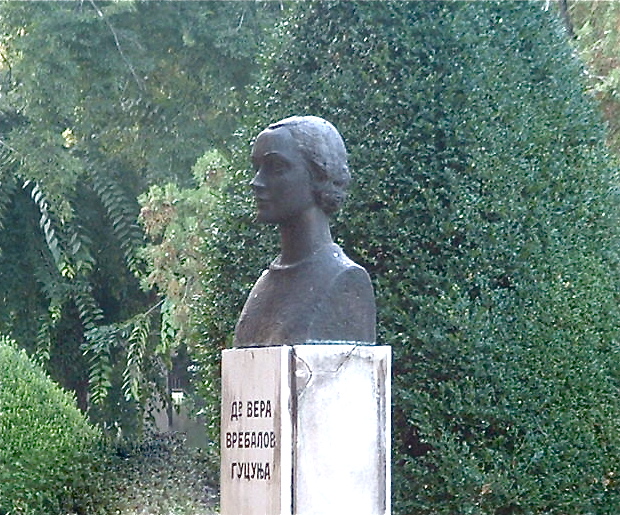
My father’s mother Vera Gucunja was a pre-war communist. She died in the revolution and there’s a bust in Sombor’s main park celebrating her heroism.

In 2007, my maternal grandmother was still alive. I wanted to spend as much time with her as possible and I wished I could bring in my friends, musicians and composers, to experience the creative, carefree power of Sombor summers. So between 2007 and 2011, I put together Summer in Sombor, a week long composition workshop with the South Oxford Six composers’ collective that I co-founded in 2002 in New York City. Kala Pierson, Daniel Sonnenberg, Mike Rose and Ed Ficklin would join me in Sombor to make music for five summers. The workshop facilitated the creation of over fifty new works by young composers from Europe and the USA. We lived together for a week, made music, played concerts, talked about creativity and values. In the evenings we swam in the canal, ate fish paprikash, and had most inspiring discussions.

Kala Pierson, Daniel Sonnenberg, Michael Rose, Aleksandra Vrebalov, Sombor 2007

Sombor has always been about art. Some of the most significant figures from country’s culture come from Sombor: poet Laza Kostic, composer Petar Konjovic, painter Milan Konjovic who was a family friend, painter Dragan Stojkov, Zvonko Bogdan whose singing of traditional songs is iconic throughout the region. Those who have lived in our time – we would visit them in their studios, see them in a cafe, or just wave on the main street. At those visits, as a kid, I would play piano in the dark, high-ceiling rooms absorbing vibes and stories like the one about Kazimir’s nagymama (grannie) taking piano lessons from Ferenc Liszt. I was five years old when I learned to play my first piano tune with both hands – that was in Sombor, in the house of my father’s best friend Kazimir, with his grandmother, Liszt’s student as the legend goes, sitting by me.

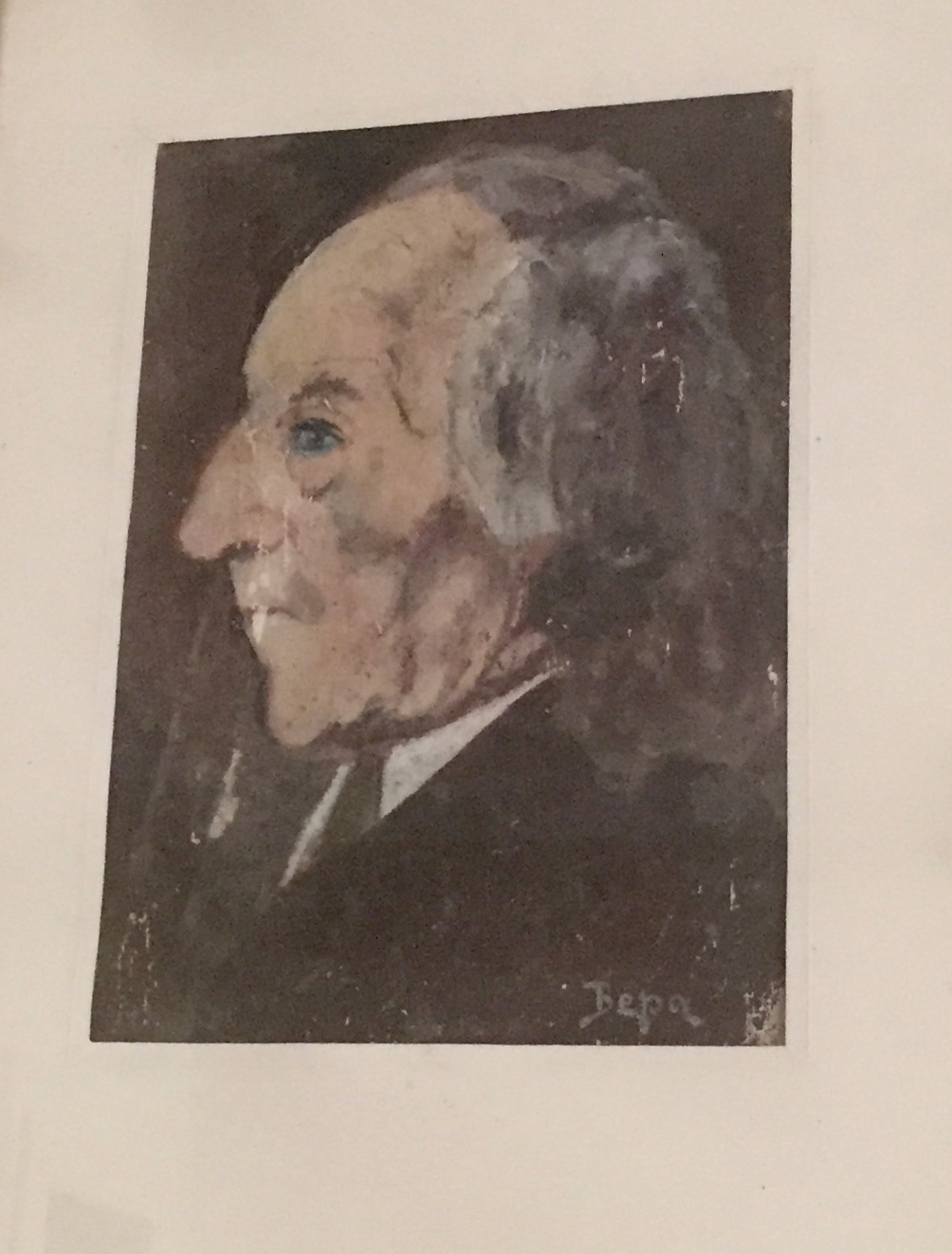
Portrait of Franz Liszt painted by my grandmother Vera Gucunja

It’s 2019. My mom and grandparents are long gone. I occasionally visit Veliko Groblje where they’re buried surrounded by family graves dating from 1700s. Living in New York City for almost 20 years I tend to forget how important death is in Serbian culture. In my childhood, paying a visit to the dead used to be an equally common and important segment of visits to Sombor as paying a visit to our living relatives. To the dead we would bring candles and flowers. The living would usually get flowers and chocolate or brandy.

Tonight, June 6, 2019, I will be in Sombor again, presenting an evening of my music at SOMUS, Sombor Music Festival. It is a full circle – music will be performed by the TAJJ Kvartet with who I have worked for twenty years now, and by pianist and old friend Mihajlo Zurkovic. The evening will be moderated by Ira Prodanov, a musicologist and a high school friend with her own family background from Sombor.

After the rehearsal, TAJJ Kvartet and Aleksandra Vrebalov.
Timea Kalmar cello, Aleksandra Krcmar violin, Jovanka Mazalica violina, Jelena Filipovic, viola

We’ll have a concert at the beautiful 200 seat National Theater where over the formative years I had seen unforgettable shows during the annual Sombor Theater Festival.

National Theater Sombor

It’s exciting to go back. There’s purpose in giving context to the present through the past — in the context of my family it is through ideas, values, intangible output rather than through our physical presence in Sombor. I like the idea of bringing sound, creativity and new people into this place of my roots. Thus there’s purpose in actualizing the past through the present, by creating continuity, bringing beauty, friendship, and a sense of belonging to the people in the audience tonight. Even though most of them might be strangers, they aren’t — we share in the Sombor lineage.