The Knock – an Opera

I have written three operas: The Knock (2020), commissioned by Glimmerglass Opera Festival and Cincinnati Opera, Abraham in Flames (2019) commissioned by N Talebi Projects and premiered in San Francisco in 2019 and Mileva (2011) commissioned by the Serbian National Theater in Novi Sad and premiered during its 150th Anniversary season.

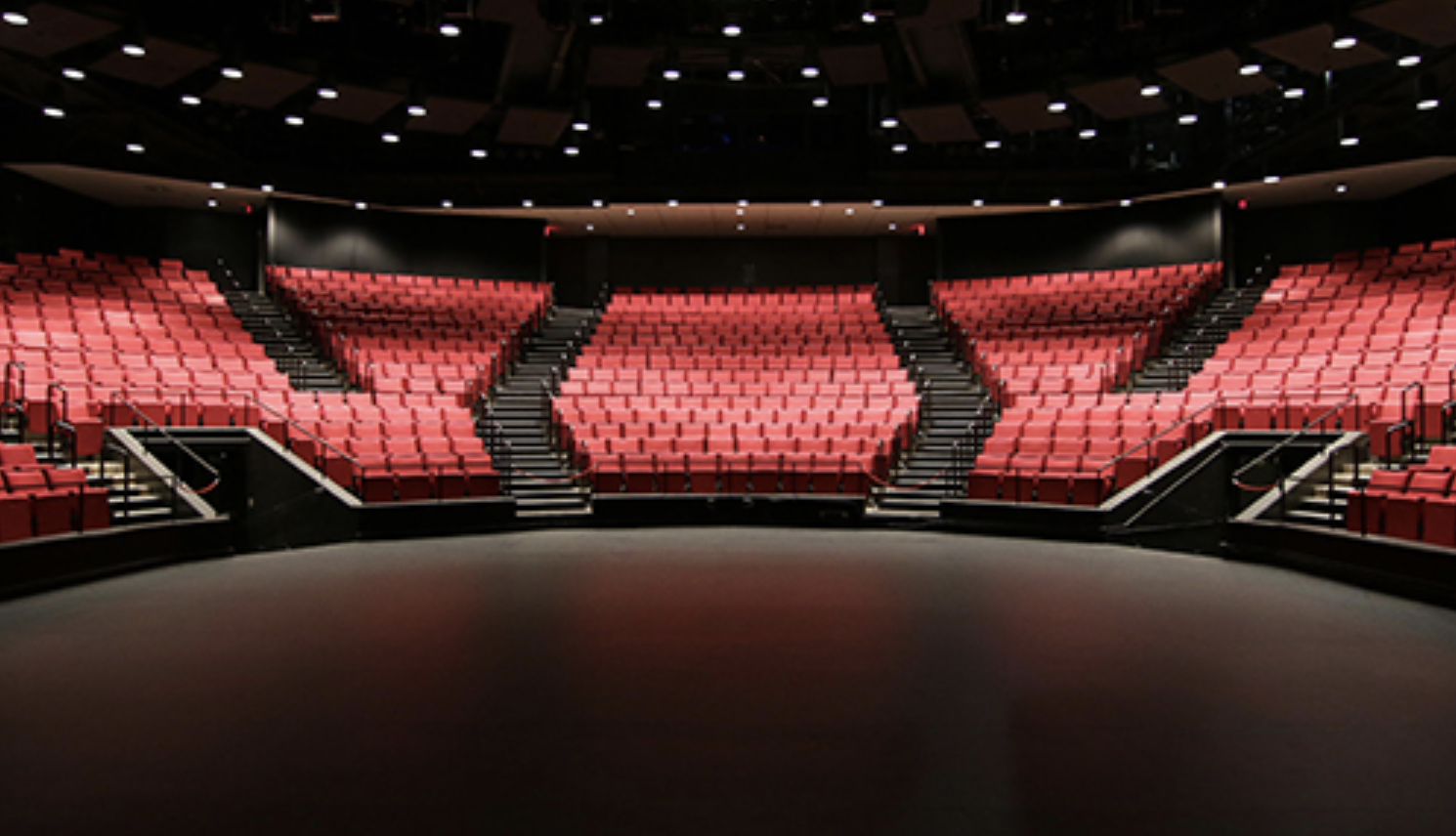
The Knock, my most recent opera tells a story of a group of military wives, whose husbands are fighting in Fallujah. They gather together because of rumors about a possible incident on the war front. As the women await word about what has taken place, a young Army officer drives across the western plains to deliver them the news. A sixty minute opera for three soloists, a chorus, and a chamber orchestra, The Knock takes the audience into the lives of America’s military spouses, a group not yet seen on the opera stage.

Cincinnati Opera – In Performance:

“The Knock” explores the friction between patriotism and personal loss, highlighting the sacrifices made by military families and the cost of war – the loss of human life. The dramatic narrative of the opera allows for an extreme range of musical expression, from tender and lyrical to horrific and solemn.  I use a full palette of sound and harmonic density to draw on the deeply felt emotions of the protagonists of the opera.

As a composer, I’m sometimes asked who I write for, but I often do not have a specific audience in mind. However, while composing “The Knock,” I found myself thinking about military wives and families who might be in the audience. It was an honor to be their voice and to express the emotions of loss, strength, and resilience through music. My hope is that this music offers insights, healing, and a deeper connection to a reality that is both urgent and relevant, even if it’s a reality that is extremely difficult to face.” Aleksandra Vrebalov, June 2023.

Music by Aleksandra Vrebalov. Libretto by Deborah Brevoort. Stage direction Alison Moritz. Music direction Lidiya Yankovskaya.

About The Knock

Questions by Glimmerglass Festival, January 2021

-What is your show about?

The Knock is an opera about military wives receiving a death notice.  It’s a fascinating world – pretty much hermetic, hidden from the outsiders, driven by protocols.  Suffering and heroism, sacrifice and privilege, personal and public sphere, joy and sorrow – all coexist in extremes.  I grew up in a family of WWII heroes, my dad is a WWII orphan, the only child of my grandparents, who both died fighting fascists.  I grew up having a strong sense of pride for being from a family of patriots, heroes who gave their lives for the country. At the same time there was so much personal, behind-the-scenes grief that marked the family because of the loss of lives.  While writing the Knock I wanted both aspects to be honored – the public, stately side – heroic sacrifice, along with what happens on the inside – the rawness of a personal loss.

-Why do you think this is an important story to tell in 2021?

I believe that any story that inspires us or concerns us as awake citizens is an important story to tell. Its relevant because it deals with our values, with what’s important to us.  In this case, it is the friction between patriotism and personal loss, the topic itself, the cost of war.  But for me, it is also about the families who make sacrifices.  Sometimes I would be asked as a composer – who do you write for, is there some imaginary audience you’re addressing. And most often I wouldn’t  have an audience in my mind while I write music.  While writing the Knock, however I was surprised how many times I thought of military wives and families sitting in the audience.  I felt the privilege of being their voice, to express in public the emotion of loss, also of strength and resilience.  If for anyone, I wrote the piece FOR them and I did my best to be a just, sensitive, responsible medium.  

-Why does this story need to be told as an opera piece? 

Opera – drama in music – is an adequate medium to contain and express the wide range of intense emotion that our story carries. I actually cannot think of a more perfect form for this story to be told – opera does its magic both through the language, verbal language AND music.  The sound of music unlocks our ability to feel and make emotional connections in more immediate, non verbal ways.  So we can have insights, heal, relate to reality in a more profound way.

-Have you learned anything interesting as part of the process of researching / writing this piece? Has anything surprised you?

I learned about the power of protocol in the military.  The Knock is really driven by the protocol – its’ not a random set of events.  The protocol gave it a structure, but then like in life, the emotion seeps through it and makes it personal.  Deborah did so much research and spent time with women, the military wives — it felt in the libretto there were real people.  Working on the Knock was very emotional for me.  Maybe also because it entirely coincided with the pandemic and the quarantine. I’ve been by myself, with no distraction and steeped in the feelings of my characters. 

Has anything surprised you?

What surprised me most is that I realized at some point along the way that I actually believe that The Knock, as dark as it is, can be a soothing, vibrant experience.  I still believe that.   

History with Glimmerglass:

I was the first Douglass Moore composition fellow almost 20 years ago and spent the summer at Glimmerglass learning about nuts and bolts of opera. I fell in love with the opera house in the fields, I was present at all rehearsals of Mines of Sulphur as an observer, I stayed over in Cherry Valley.  I remember white rocking chairs on the veranda of the Otesaga hotel – it was so elegant and so American. Twenty years later,  I am American too, and my connection to opera only deepened since those days, I have written three so far.  I had hoped back then that one day I might be back with my own work.  In so many ways, this is a dream come true, and I am very grateful for it. (Aleksandra Vrebalov)
Our Voices

I was asked by Peter Askim, the music director of Raleigh Civic Symphony Orchestra, to write a piece for his group. He said that the 25 minute work would have a virtual reality component built by graduate students of North Carolina College of Design, led by Derek Ham, on a theme of suffragettes.

In 2017 Peter gave the world premiere of my Echolocations in New York’s Le Poisson Rouge; we had divided a string orchestra into three groups to play an identical material, at different times, from three different locations in the hall.

The experience was magical, as if the sound were coming from all around the audience, echoing across space. Textures and volume mixed and merged right next to one’s ear as well as in the distance. There was a sense of oneness between the musicians/sound and the audience since the stage as a divide did not exist.

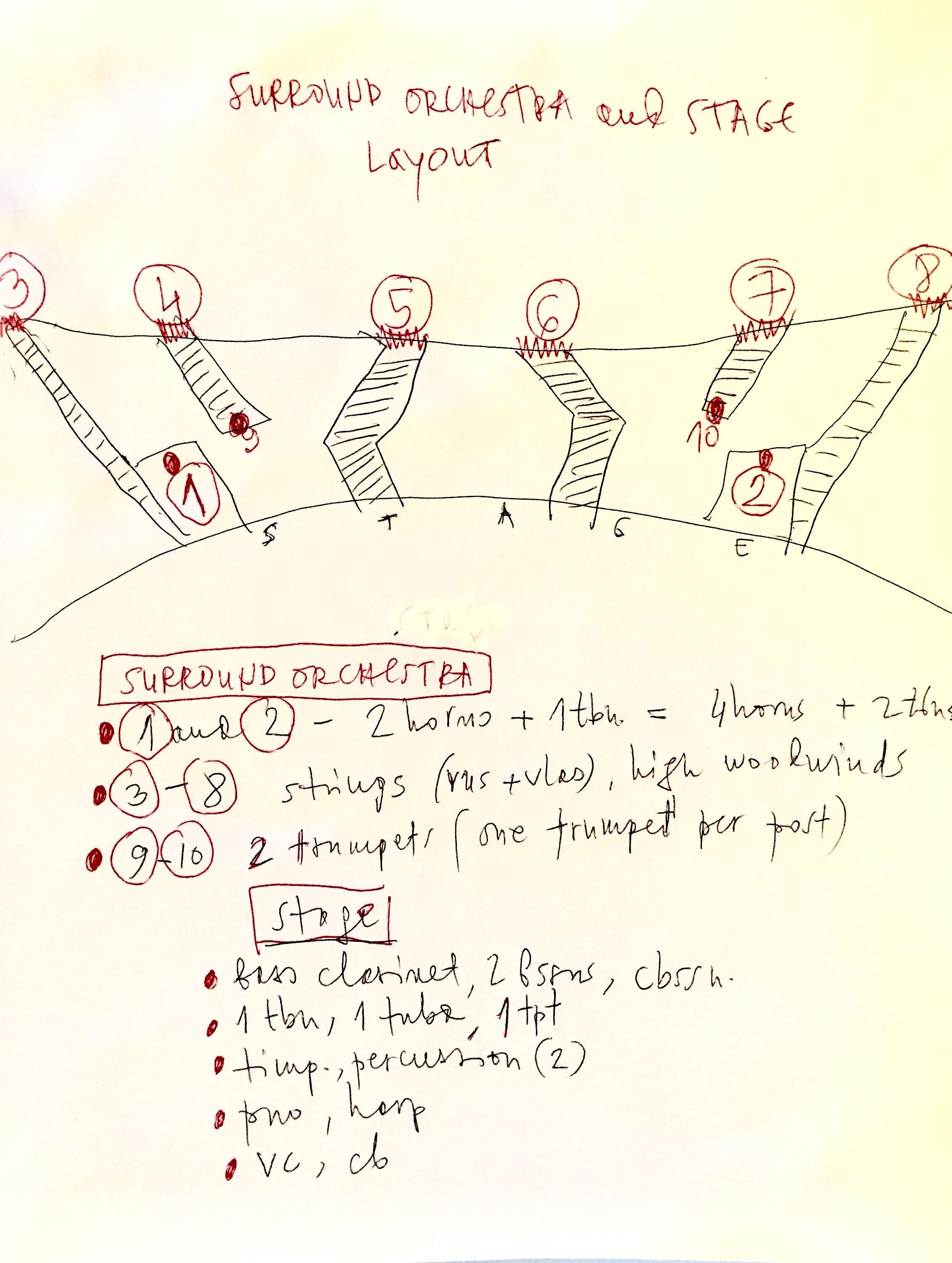
Peter asked me to do something similar with the new work – to spatialize the orchestra. It is a dream situation to get permission from a conductor (Peter is also a composer and a bass player) to break the standard layout of this gigantic body of sound and explore it. There were several things to solve: how to make musicians comfortable while away from their usual places on stage; how would they follow the conductor and be able to hear others if they are dispersed throughout the auditorium; would they like the idea of being challenged that way, since their experience is to belong to a group and play as a group; where would they stand in the specific hall that I never visited? I got photos of the hall – there was room to have musicians in different spots, so I decided to divide them into Surround and Stationary groups. Instruments that can’t move would stay on stage and be the Stationary orchestra, while the Surround orchestra with all portable instruments (high strings, woodwinds and high brass) would be positioned around the audience.

Stewart Hall where Our Voices will be premiered on April 14, 2019 by NC Civic Symphony, conducted by Peter Askim
Our Voices – distribution of instruments throughout the auditorium

The piece needed to be lean in terms of notation, as the lighting, stands, and all elements of the orchestral setup would not apply to this performance. (Also, Surround orchestra members would be standing for the duration of the entire piece.)

I divided the piece into six sections framed by Intro and Epilogue. In both Intro and Epilogue, musicians are asked to use their voices. In Intro, everyone gradually joins in a hum on A a cappella, while in the Epilogue the Surround orchestra members walk through the auditorium calling the names of women in their lives who inspired them: their grandmothers, mothers, sisters, wives, teachers…it’s a personal choice.

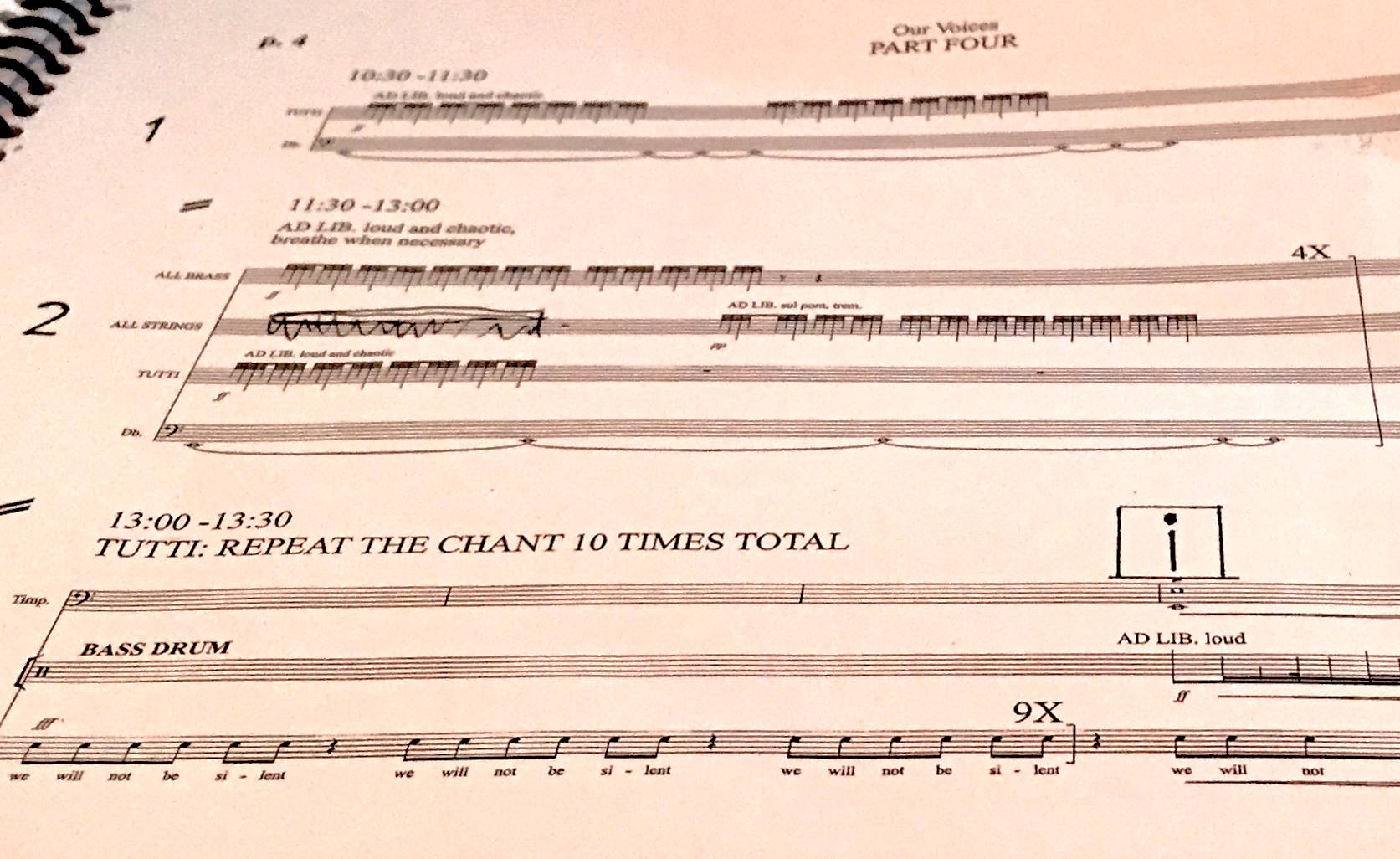
Aleksandra Vrebalov: Our Voices, excerpt from the score

Parts 1-6 are all organized around pitch centers (B, C, D, E, F, and G) so all musicians can come in and out of playing, knowing how to fit in harmonically. The score is open, no meter, mostly aleatoric, with options offered, but choices entirely upon the 80 people playing the piece. The role of the conductor is to keep time and organize transitions, while his gestures do not mark sharp beginnings or endings of gestures and sound. Transitions between the sections are fluid and overlapping.

Aleksandra Vrebalov: Our Voices, excerpt from the score

There were many interesting insights during our rehearsal in Raleigh, NC this week: most of musicians in the orchestra would start and stop immediately following conductor’s gesture although the instruction states – the conductor’s gesture means you can start from this point on at your own time; or with the ending – wrap up your material at your own pace and move onto the next thing.

The atmosphere during the one rehearsal I attended was inspiring – we were searching for new ways of individual expression, trying out new techniques not so common in the standard orchestra repertoire, understanding the concept of musical time in which there is no counting, but listening and responding instead, discovering ways to feel safe without the structure of barlines and meter.

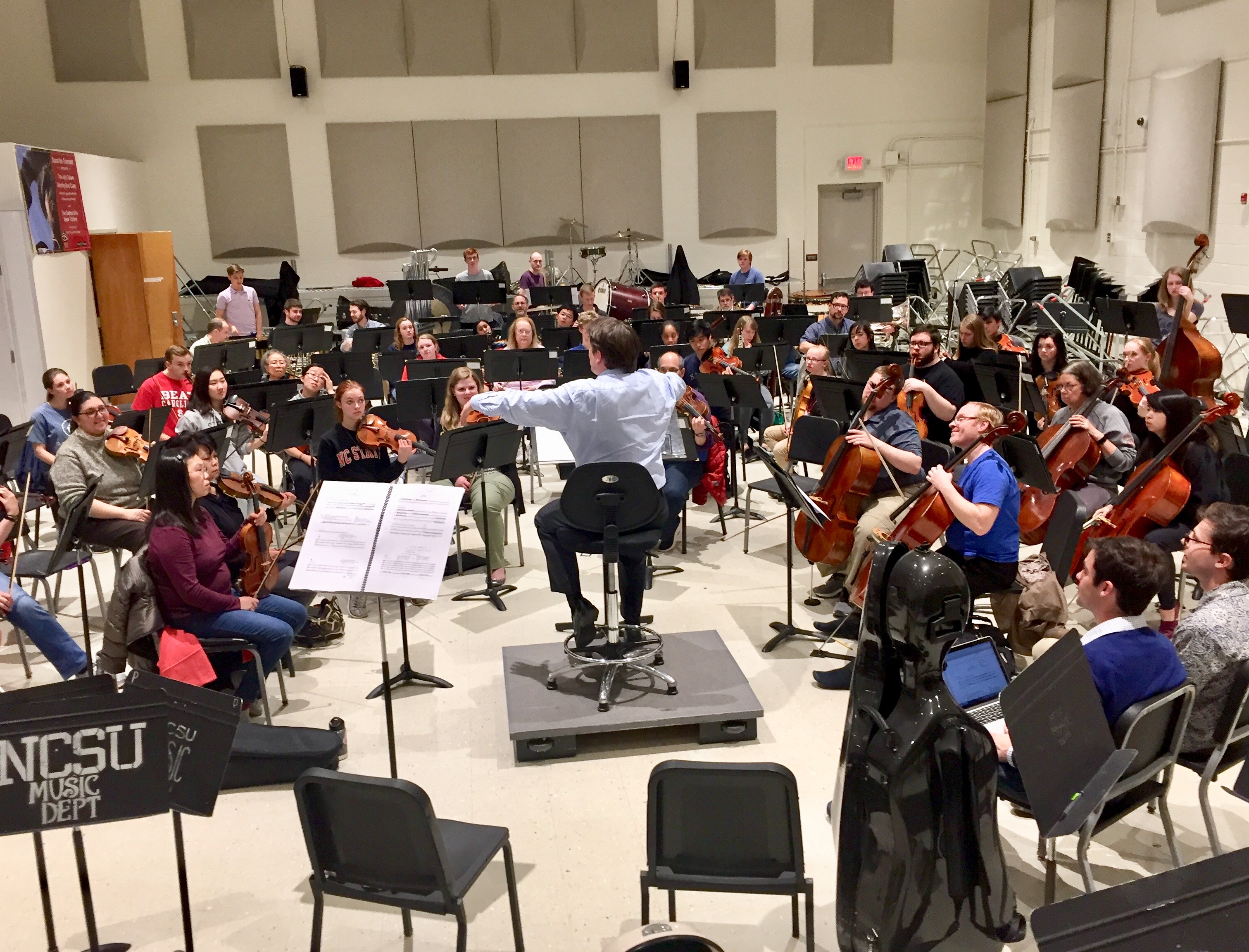
Rehearsing with The Raleigh Civic Symphony, Peter Askim music director

In terms of rehearsal methodology, Peter had me talk to the orchestra about each section, then we played it through, worked on timing and explored sound, and played it through again. After going through the entire piece we were ready to try spatialization. The Surround orchestra members placed themselves around the rehearsal space, all of them behind the conductor – and we had the first run-through. The sound was traveling in all directions creating most beautiful, unexpected sonorities.

My favorite part was when the orchestra for a brief moment accompanied the recording of Billie Holiday singing Strange Fruit. Again, there was no meter, barlines – just Billie’s voice with her beautiful, free, out-of-time phrasing.

Peter and I had several conversations on how to make that segment with Billie Holiday doable for the orchestra. I didn’t want to transcribe the song with any specific metric or tonal changes. My idea was to have the orchestra follow her voice, rather than following the conductor. The very topic of the piece – the struggle for equality, somehow symbolically came up in the treatment of that sample from Strange Fruit: in an ideal world of citizens with high consciousness we would not need to be told what to do and whether and when to support the voice of another. By listening and doing our best to understand and support the other we would create a different humanity.

Peter’s concern for precision and clarity was a great reminder that I am creating a work for eighty people whose comfort and success in delivering that music also depend on how aligned they feel with one another and the recording of Billie’s voice. We were deliberating whether I should rewrite the score and instead of just saying ‘follow Billie, c-minor” write out orchestral parts transcribing the metric freedoms that she takes while singing. I decided against it. In this specific case I wanted each individual to take charge, be responsible for their choices, listen, try to provide support, swim in uncertainty if so happens, rather than follow the conductor. The invitation to the orchestra to join in freely around Billie Holiday’s voice in Our Voices calls for a personal, unique contribution of everyone involved in the piece, rather than an orchestrated, controlled response. The thinking through of those two options (lock it in a standard notation or keep it as open as possible) inspired me to write a poem about how I made musical choices in this piece. The poem also reflects on a larger context of what it means to belong to and to create our humanity. I dedicated the poem to Peter, who invited me and trusted me throughout this creative adventure.

Accompanying Billie Holiday in Strange Fruit

Do 
Not
Be
***
At
Me
I am like you
And you are like me
Doing my best
Often fast
Sometimes slow
Wanting all
And then some more
Creating order
Bliss or mess
Still true and real
Despite distress
Those Billie-lines
More than once
Made me cry
As I fit them
In odd times
Whole notes
Half notes
Aren’t wrong
They are 
Dark and lost
To song
Of pain and 
Crisscrossed time
No chance to
Truly align
Unless
We all agree
That 
What is yours
Is also mine
What was theirs
Was hers at times
Wanting best
Yet often failing
Feeling rough
Still trust prevailing 
Contrasts of
Wants and coulds
Of possibles and shoulds
No wiser thing
No greater power
Than seeing
With one’s heart
Into the dark hour
Of those Billie-lines
They might also
Make you cry
As you play them
In odd times

London, January 29, 2019, for my friend, collaborator, and a fellow composer Peter Askim.  

Our Voices, full recording of the world premiere. Raleigh Civic Orchestra, Peter Askim conducting, April

Our voices was commissioned by NC State University and NC State Sustainability Fund. Our Voices has been featured on NCSU Website:

https://news.ncsu.edu/2019/04/concert-blends-music-with-vr/?utm_campaign=concert-blends-music-with-vr/&utm_medium=referral&utm_source=ncsu.edu&utm_content=hp-hero


Le Jardin Qui Rit – The Laughing Garden

a new dance piece in the making

After months of traveling, I returned to New York on Thursday and started rehearsing with Dusan Tynek Dance Theatre on Friday for our new show, The Laughing Garden.  This is my seventh collaboration with Dusan over 15 years.  Our long creative relationship enabled us to expand and grow together trying out different ways to create a dance – from sound coming before choreography, to building music and choreography simultaneously, to choreography coming first, to the current approach of establishing the vocabulary and freely creating music and choreography together in real time, before your eyes. 

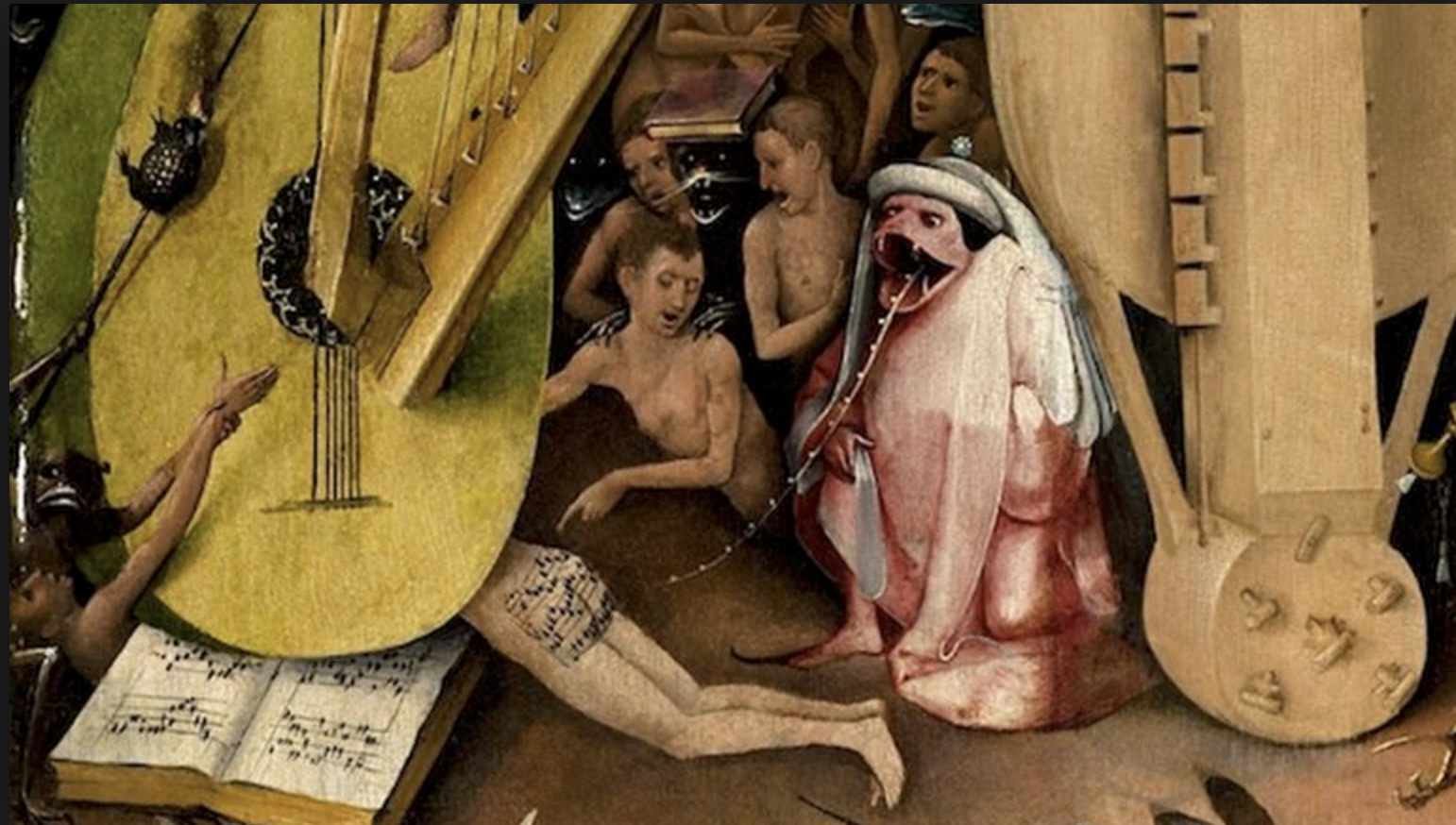
The Laughing Garden is inspired by Hieronymus Bosch’s Garden of Earthly Delights and is filled with moments of primal energy, joy, some darkness, a lot of playfulness.  

Detail from Garden of Earthly Delights, Hieronymus Bosch

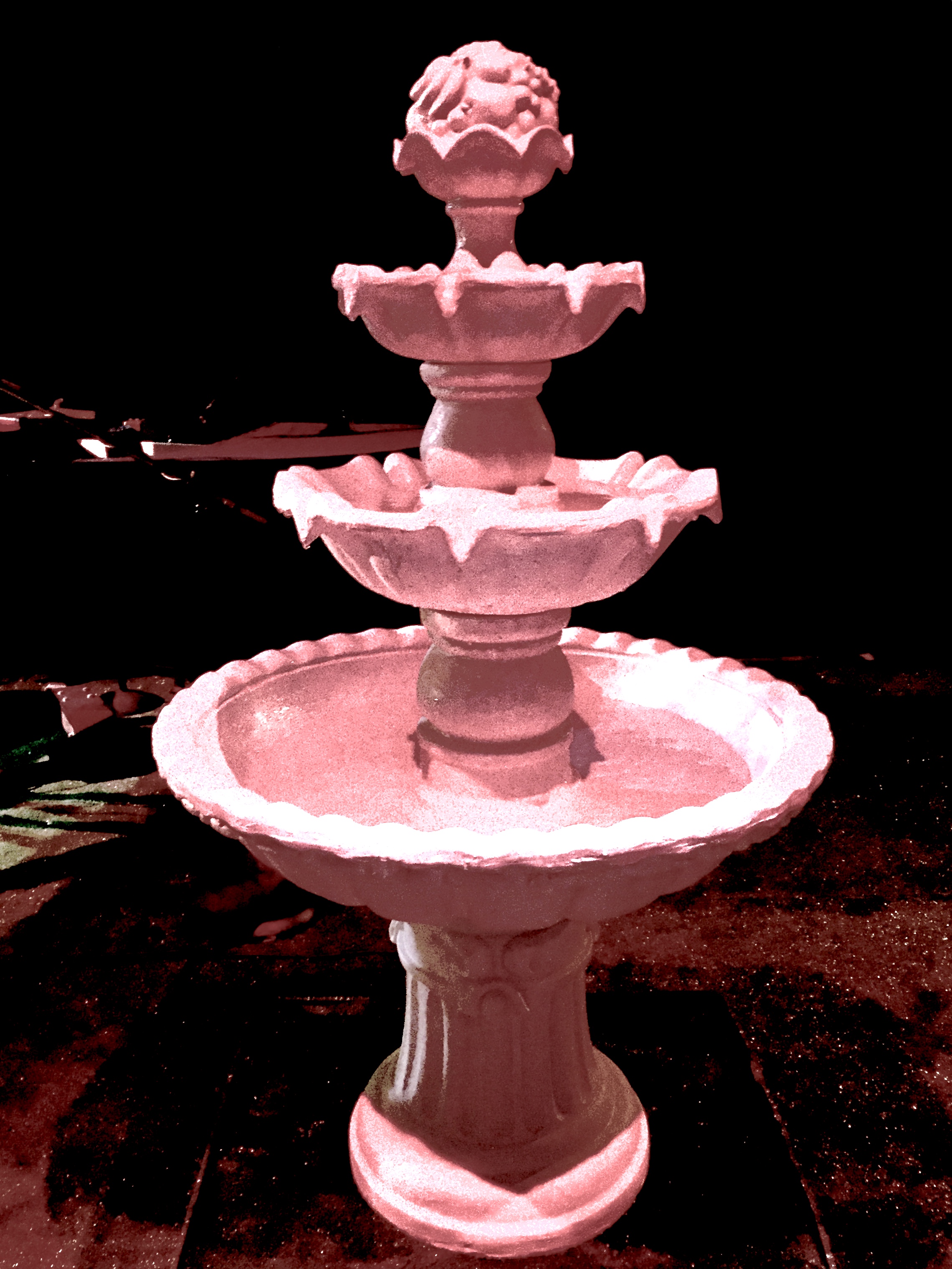
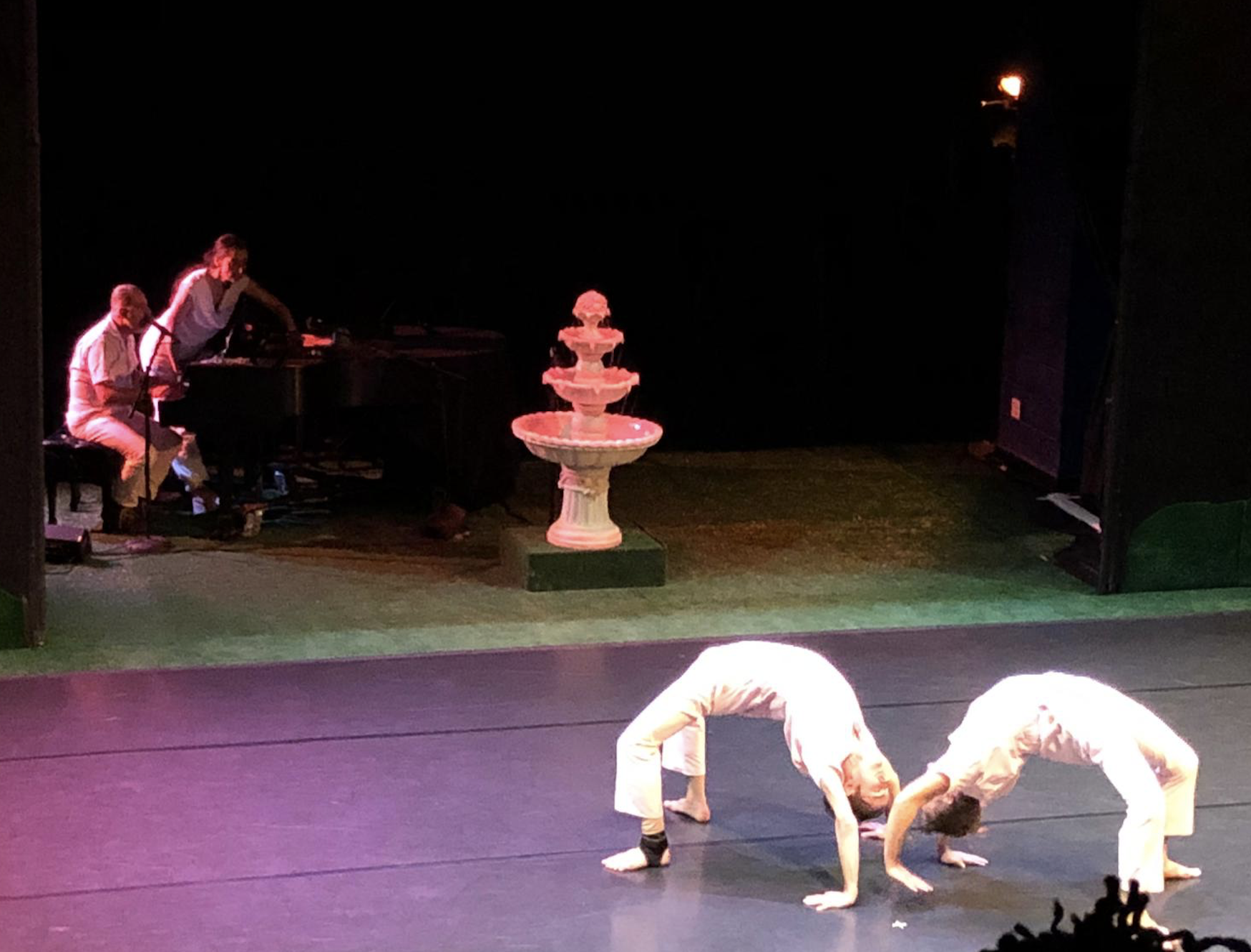
I am thrilled that my friend and a fantastic composer Luciano Chessa will join me in creating a live score for performances. We will be on stage with six dancers and make sounds on prepared piano and other objects, including a water fountain.

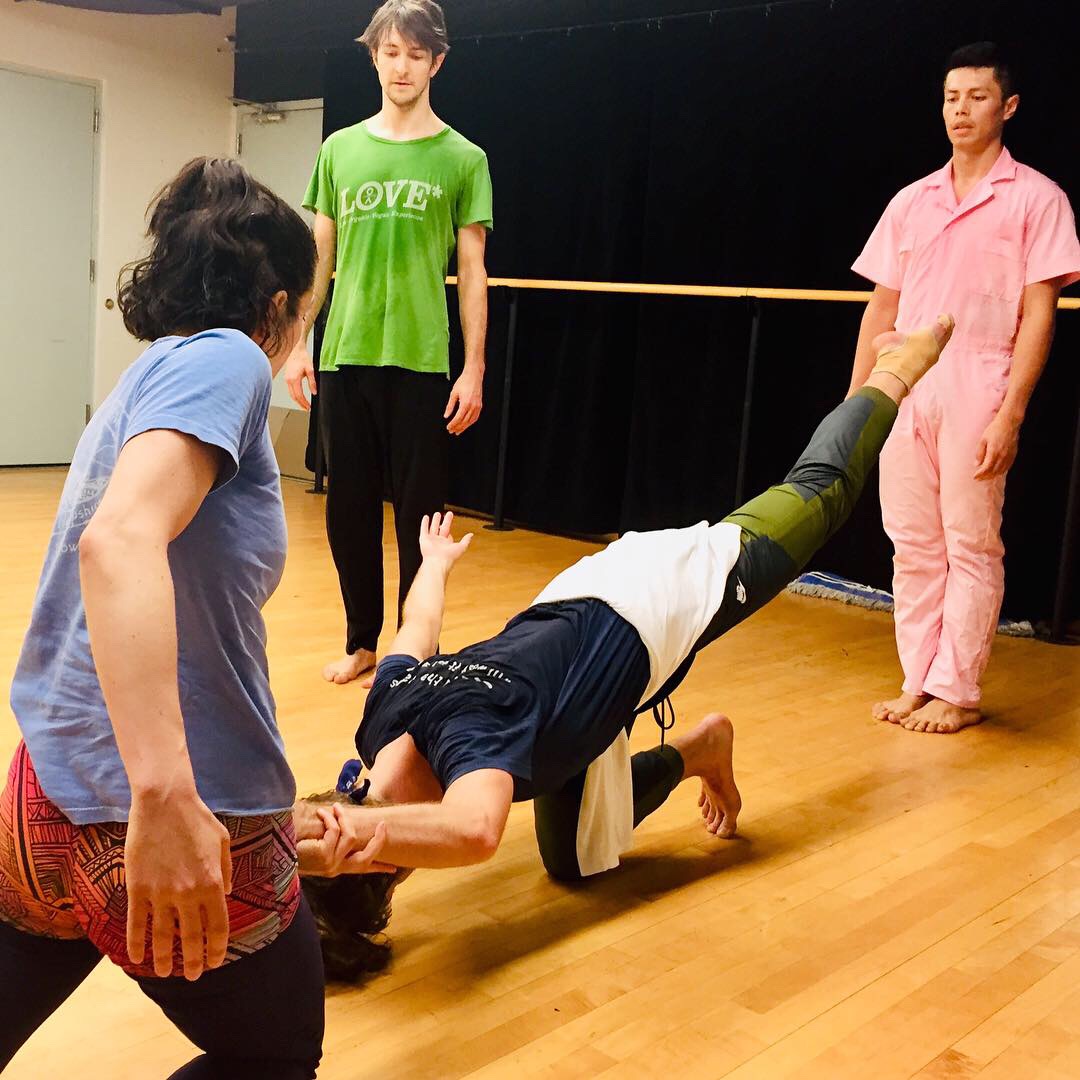
Alexandra Berger, Ned Sturgis, Tim Ward, Gary Champi of Dusan Tynek Dance Theatre rehearsing The Laughing Garden, March 2019
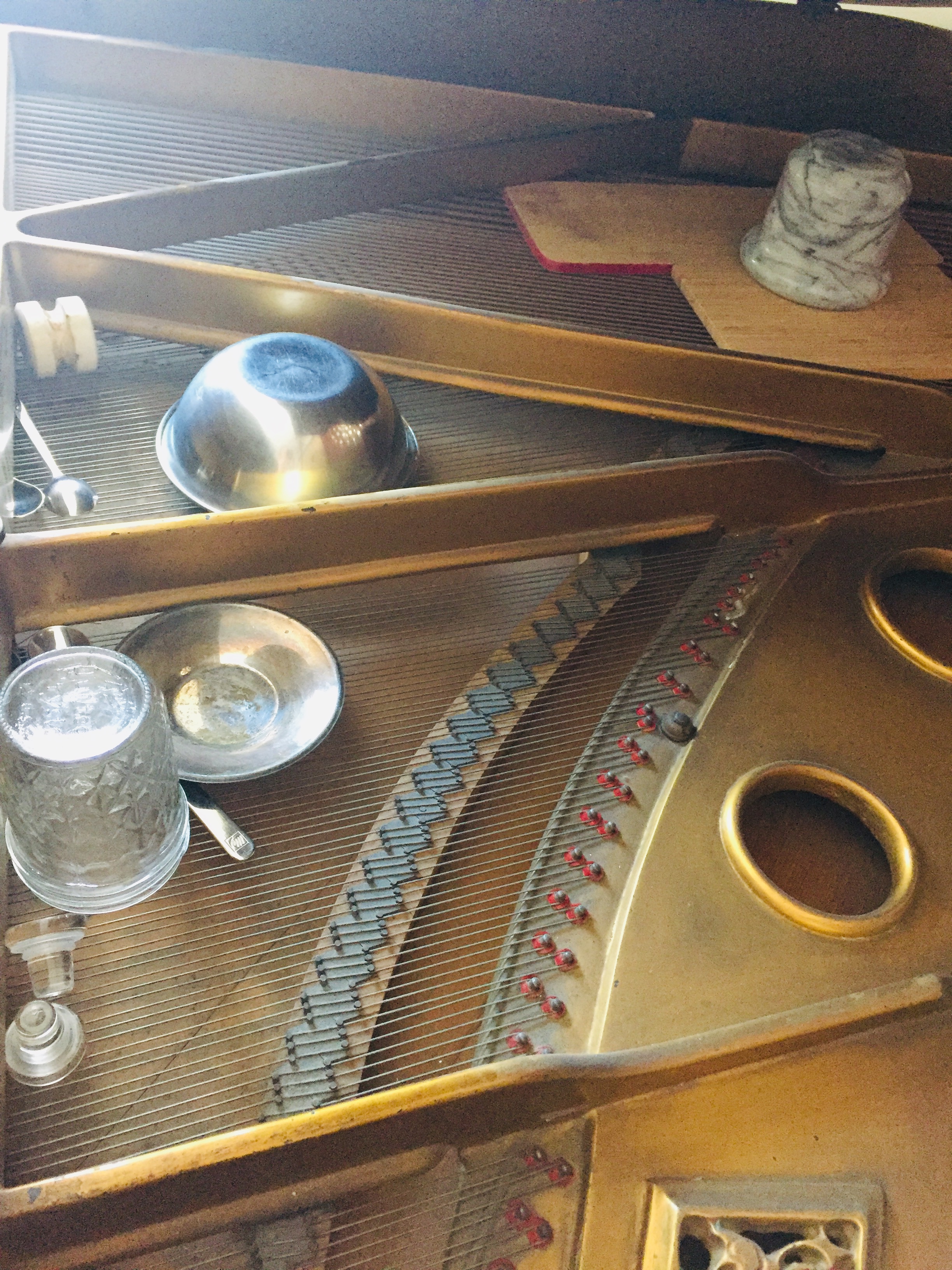
Prepared piano from last night’s rehearsal of the Laughing Garden

The creative process has been fun, an exercise in a discipline of relating. It’s beautiful to experience the piece being re-created with every performance, based on choices and responses of each moment by every individual engaged in the process.

Luciano and I first established the vocabulary so that we can independently create our parts.


Taking a closer look into the fantastical painting by Bosch I found out about the music inscribed on a sinner’s bottom on the right panel of the tryptic, the Hell. The sound Luciano and I decided to create for the dance is abstract and without any linear musical narrative. At the same time we wanted to have a focal point where musically all kinds of disparate elements come together into a little tune, a phrase, a place of intimacy. And there it was, the little chant, inscribed by Bosch himself waiting to be brought to life; this time in the context of joy and beauty, rather than sin and punishment.

The tune – detail from Garden of Earthly Delights, by Hieronymus Bosch

I see this newest work with Dusan as a curious look into the profusion of life and nature – which is creativity itself. It is funny, fun, unstoppable, rich, fragrant, colorful, and free.

See the details about the show and come see us if you are in New York:
https://www.newyorker.com/goings-on-about-town/dance/dusan-tynek-dance-company

Update, March 11 – We had a blast. Every evening was different, as sound was improvised/live. It was thrilling to have the full house every night; more than 600 people saw the show. Here are a few pictures from the Garden with all its protagonists: the fountain, composer Luciano Chessa and myself, and superhuman dancers Elizabeth Hepp, Tim Ward, Ned Sturgis, Alexandra Berger, Nicole Restani, and Gary Champi.